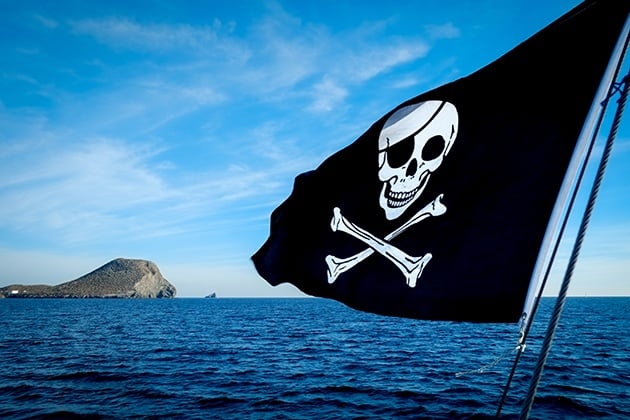
Perhaps no symbol is more iconic than the eerie skull and crossbones of a Jolly Roger flag. There is more to this infamous image than meets the eye; for the flag of the pirate was far more complex than what popular culture portrays. Here are some interesting flag facts and trivia about pirate flags that you might not know!
Whether you're a swashbuckling pirate or a landlubber in search of your own iconic, customized flag, don't hesitate to contact us at Accent Banner to create your own designs and request a free quote!
Pirates Used Flags to be Sneaky
The pirate flag was not flown at all times. Pirate ships would fly flags of friendly nations to trick incoming vessels, and when the ships were close enough, only then would the crew raise their Jolly Roger as a warning to surrender.
Execution Due to Flag-Ownership
Can you imagine a flag being so influential and feared that a person could be sentenced to death just by owning one? During the Golden Age of Piracy, simply owning a pirate flag was illegal. Since there was no reason for someone who wasn't a pirate to own the flag, the individual in question would be assumed to be a pirate, a crime for which the punishment was death.
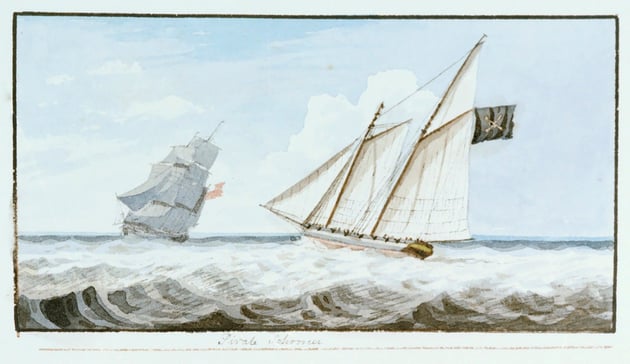
Image Credit: National Maritime Museum, Greenwich, London
Before the Skull and Crossbones
Early versions of pirate flags were actually solid red or black. Privateers would traditionally fly a red flag to let incoming ships know they were not associated with the Royal Navy. Since many of these privateers eventually became pirates, it was only natural that they would choose to keep the red flag.
Black flags were a welcoming sight to the pirates' victims. Although being attacked by pirates was never a good thing, a black flag signalled that the crew's lives would be spared, though their cargo would not.
A letter to the British Journal about a 1724 pirate attack explains, “They hoisted Jolly Roger (for so they call their black Ensign)…When they fight under Jolly Roger, they give a quarter, which they do not when they fight under the Red or Bloody Flag.”
For the lives of the crew to be spared, the victim ship would have to lower its flags upon sight of the black flag, also called "striking the colors", to signal a surrender. Otherwise, pirate ships would raise their red flag, a signal that a bloody fight was about to begin.
The "Jolly Roger"
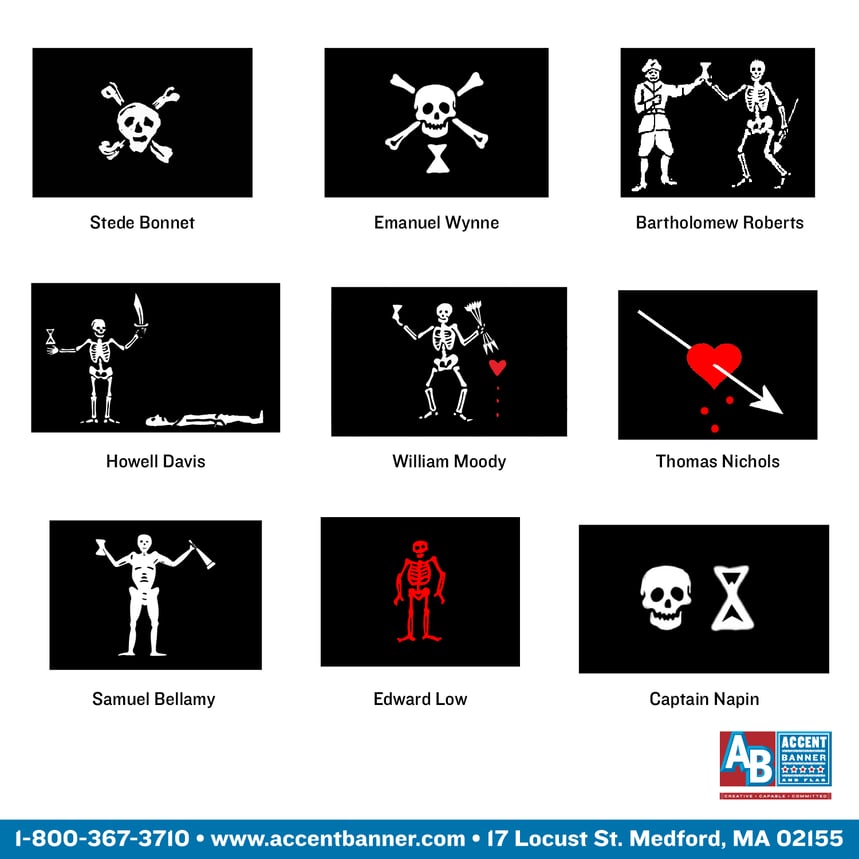
The first usage of the term "Jolly Roger" can be dated at least back to the early 1700s, where it is mentioned in Charles Johnson's 1724 book A General History of the Pyrates. In his book, Johnson cites two pirates who have flags called Jolly Roger. It should be noted that these two pirates had differing flag designs, which implies the name was used in reference to black pirate flags in general, rather than one specific design.
Historians have many guesses as to the name's origins, but no one is certain. Some suggest that Jolly Roger may be a mispronunciation of the French phrase joli rouge, meaning pretty red, and possibly references the red flags flown by French privateers. Others suggest that the term may be a combination of this French term and "Old Roger", a common colloquial name for the Devil.
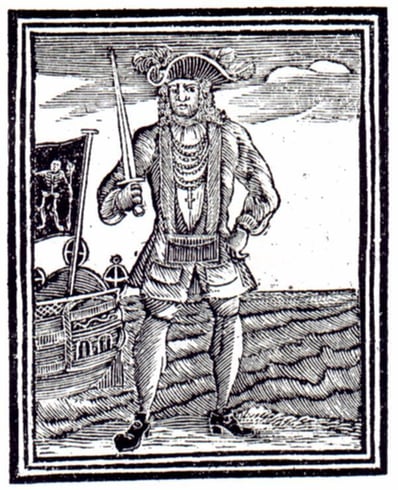
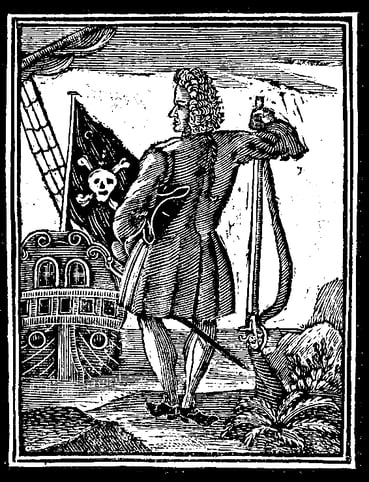
1725 woodcut illustrations of pirates Bartholomew Roberts and Stede Bonnet with their differing Jolly Roger flags,
from Charles Johnson's A General History of the Pyrates
Pirates Had Personalized Flags
We're all familiar with the skull and crossbones, but did you know there were multiple renditions of pirate flags? Almost every pirate ship had a unique flag design suited to the captain's particular taste, and it was extremely rare for two pirates to have the same flag. With the most common symbols being skulls and skeletons, other popular themes were blood, swords, and hourglasses (symbolizing the enemy's incoming death). All struck fear in their victims, making them more likely to surrender their booty.